April
Jump to: April 5 10 15 20 25
April 1
April 1, 1865 - During the American
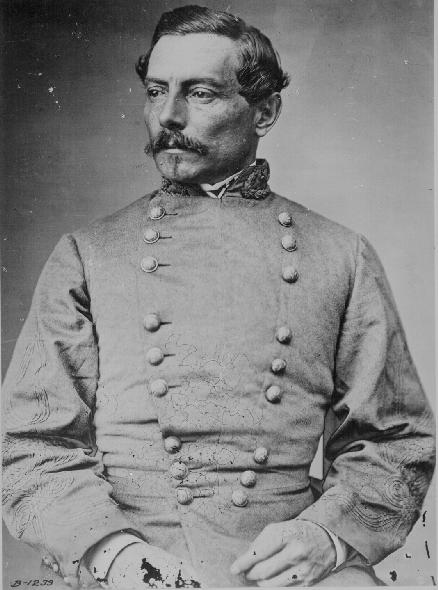
Civil War, Confederate troops of General George Pickett were defeated and
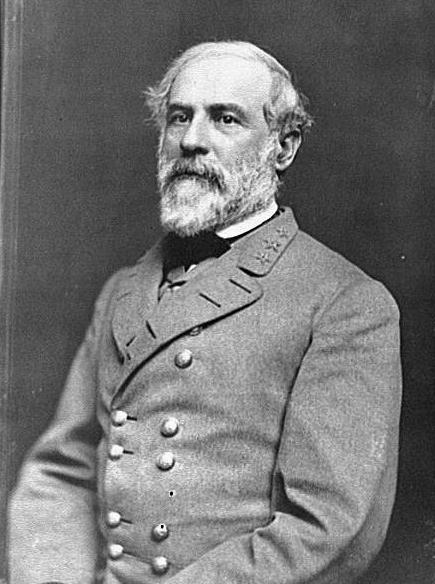
cut off at Five Forks, Virginia. This sealed the fate of Confederate General Robert
E. Lee's armies at Petersburg and Richmond and hastened the end of the
war
April 1, 1998 - A federal judge in Little Rock, Arkansas, dismissed a sexual harassment
case against President Bill Clinton, stating the case had no "genuine
issues" worthy of trial. Although President Clinton had denied any wrongdoing, a unanimous ruling by the U.S.
Supreme Court in May 1997 allowed the case to proceed, thereby establishing a precedent allowing sitting presidents to
be sued for personal conduct that allegedly occurred before taking office.
April 2
April 2, 1513 -
Spanish explorer Ponce De Leon sighted Florida and claimed it for the
Spanish Crown after landing at the site of present day St. Augustine,
now the oldest city in the continental U.S.
April 2, 1792 - Congress established the first U.S. Mint at Philadelphia.
April 2, 1863 -
A bread riot occurred in the Confederate capital of Richmond, Virginia,
as angry people demanded bread from a bakery wagon then wrecked nearby
shops. The mob dispersed only after Confederate President Jefferson
Davis made a personal plea and threatened to use force.
April 2, 1865 -
General Robert E. Lee informed
Confederate President Jefferson
Davis that he must evacuate the Confederate capital at Richmond,
Virginia. Davis and his cabinet then fled by train.
April 2, 1982 -
The beginning of the Falkland Islands War as troops from Argentina invaded
and occupied the British colony located near the tip of South America.
The British retaliated and defeated the Argentineans on June 15, 1982,
after ten weeks of combat, with about 1,000 lives lost.
Birthday - Fairy
tale author Hans Christian Andersen (1805-1875) was born in Odense,
Denmark. He created 168 fairy tales for children including the classics The Princess and the Pea, The Snow Queen and The Nightingale.
Birthday - French
writer Emile Zola (1840-1902) was born in Paris. His works included
a series of 20 books known as the Rougon-Macquart Novels in which
he defined men and women as products of heredity and environment, portraying
them as victims of their own passions and circumstances of birth. In
his later years, he became involved in resolving the Dreyfus affair,
a political-military scandal in which Captain Alfred Dreyfus had been wrongly
accused of selling military secrets to the Germans was sent to Devil's
Island.
April 3
April 3, 1860 -
In the American West, the Pony Express service began as the first rider
departed St. Joseph, Missouri. For $5 an ounce, letters were delivered
2,000 miles to California within ten days. The famed Pony Express riders
each rode from 75 to 100 miles before handing the letters off to the next rider.
A total of 190 way stations were located about 15 miles apart.
The service lasted less than two years, ending upon the completion of the overland
telegraph.
April 3, 1865 -
The Confederate capital of Richmond surrendered to Union forces after
the withdrawal of General Robert E. Lee's troops.
April 3, 1944 -
The U.S. Supreme Court ruled 8 to 1 that African Americans can not be
barred from voting in the Texas Democratic primaries. The Court stated
that discrimination against blacks violates the 15th Amendment and that
political parties are not private associations.
April 3, 1948 -
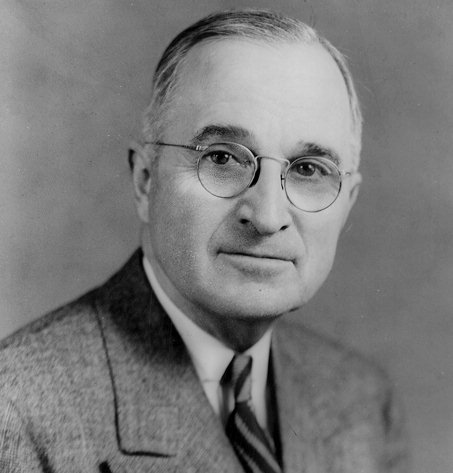
President Harry S. Truman signed
the European Recovery Program, better known as the Marshall Plan, intended to
stop the spread of Communism and restore the economies of European
countries devastated by World War II. Over four years, the program distributed
$12 billion to the nations of Western Europe. The program was first
proposed by Secretary of State George C. Marshall during a historic
speech at Harvard University on June 5, 1947.
April 3, 1995 -
Supreme Court Justice Sandra Day O'Connor became the first woman to preside over the Court, sitting in for Chief
Justice William H. Rehnquist who was out of town.
Birthday - American
writer Washington Irving (1783-1859) was born in New York City. His
works include; Rip Van Winkle, The Legend of Sleepy Hollow and historical biographies such as the Life of Washington.
Birthday - Tammany
Hall 'Boss' William M. Tweed (1823-1878) was born in New York City.
From 1851 to 1871, his 'Tweed Ring' of political corruption looted millions
from New York City, bringing the city to the verge of bankruptcy. Methods
included padding city bills by 85 percent and writing checks to non-existent
persons and companies. His power was broken after a series of critical
editorial cartoons by Thomas Nast were published in Harper's Weekly magazine. Tweed was arrested and convicted on charges of larceny and
forgery. He died in prison.
April 4
April 4, 1887 -
The first woman mayor was elected in the U.S. as Susanna M. Salter became
mayor of Argonia, Kansas.
April 4, 1949 -
Twelve nations signed the treaty creating NATO, the North Atlantic Treaty Organization. The nations united
for common military defense against the threat of expansion by Soviet Russia into
Western Europe.
April 4, 1968 -
Civil Rights leader Rev. Dr. Martin Luther King was shot and killed
by a sniper in Memphis, Tennessee. As head of the Southern Christian
Leadership Conference, he had championed non-violent resistance to end racial
oppression and had been awarded the Nobel Peace Prize in 1964. He is
best remembered for his I Have a Dream speech delivered at the
1963 Civil Rights March on Washington. That march and King's other efforts
helped the passage of the Civil Rights Act of 1964 and the Voting Rights
Act of 1965. In 1986, Congress established the third Monday in January
as a national holiday in his honor.
Birthday - American
social reformer Dorothea Dix (1802-1887) was born in Hampden, Maine.
She founded a home for girls in Boston while only in her teens and later
crusaded for humane conditions in jails and insane asylums. During the
American Civil War, she was superintendent of women nurses.
Birthday - Japanese
Admiral Isoroku Yamamoto (1884-1943) was born in Nagaoko, Honshu. He
was the main strategist behind the failed Japanese attack on Midway
Island in June of 1942, which turned the course of the war against Japan.
He was killed on April 18, 1943, after Americans intercepted radio reports
of his whereabouts and shot down his plane.
April 5 Return
to Top of Page
April 5, 1986 -
A bomb exploded at a popular discotheque frequented by American military
personnel in West Berlin, killing two U.S. soldiers and a Turkish woman.
American intelligence analysts attributed the attack to Muammar Qaddafi of Libya.
Nine days later, President Ronald Reagan ordered a retaliatory air strike against
Libya.
Birthday - African
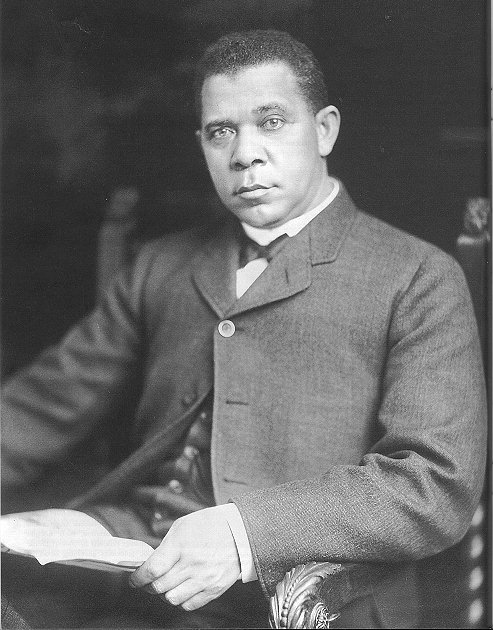
American educator Booker T. Washington (1856-1915) was born a slave in Franklin County, Virginia. Freed by
the Civil War, he taught himself the alphabet and eventually graduated
from an agricultural institute. In June of 1881, he was asked to become
the principal of a new training school for blacks at Tuskegee, Alabama.
The Tuskegee Institute began in single building with 30 students but
through his efforts grew into a modern university.
April 6
April 6, 1896 -
After a break of 1500 years, the first Olympics of the modern era was
held in Athens, Greece.
April 6, 1917 -
Following a vote by Congress approving a declaration of war, the U.S.
entered World War I in Europe.
April 6, 1994 -
The beginning of genocide in Rwanda as a plane carrying the presidents
of Rwanda and Burundi was shot down. They had been meeting to discuss
ways of ending ethnic rivalries between the Hutu and Tutsi tribes. After
their deaths, Rwanda descended into chaos, resulting in genocidal conflict
between the tribes. Over 500,000 persons were killed with two million
fleeing the country.
Birthday - Renaissance
artist Raphael (1483-1520) was born in Urbino, Italy. He created some
of the world's greatest masterpieces including 300 pictures with a Madonna
theme. He died on his 37th birthday in Rome.
April 7
April 7, 1712 - In New York City, 27 black slaves rebelled, shooting nine whites as
they attempted to put out a fire started by the slaves. The state militia
was called out to capture the rebels. Twenty one of the slaves were executed
and six committed suicide.
April 8
April 8th - Among
Buddhists, celebrated as the birthday of Buddha (563-483 B.C.). An estimated
350 millions persons currently profess the Buddhist faith.
April 8, 1952 -
President Harry S. Truman seized
control of America's steel mills to prevent a shutdown by strikers.
However, on April 29th, the seizure was ruled unconstitutional by a U.S.
District Court. Workers immediately began a strike lasting 53 days,
ending it when they received a 16-cents per-hour wage increase and additional
benefits.
April 8, 1913 -
The 17th Amendment to the
U.S. Constitution was ratified requiring direct popular election of
U.S. senators. Previously, they had been chosen by state legislatures.
April 8, 1990 -
Ryan White died at age 18 of complications from AIDS. As a young boy,
White, a hemophiliac, contracted the Acquired Immune Deficiency Syndrome
from a blood transfusion. At age ten, he was banned from school. He
then moved with his mother to Cicero, Indiana, where he was accepted
by the students. As his plight was publicized, he gained international
celebrity status and helped promote understanding of the dreaded disease.
April 9
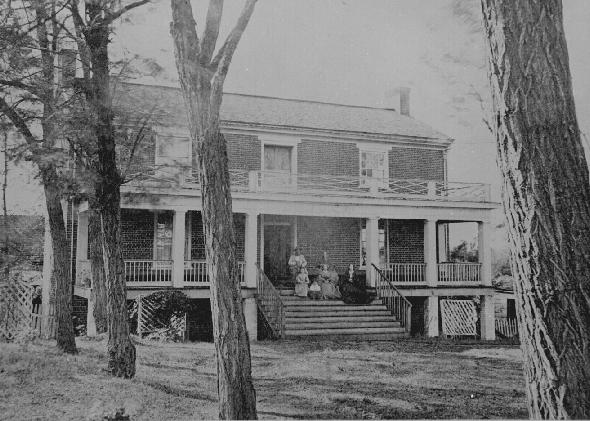
April 9, 1865 - After over 500,000 American deaths, the Civil War effectively ended
as General Robert E. Lee surrendered to General Ulysses S. Grant in the village
of Appomattox Court House. The surrender occurred in the home
of Wilmer McLean. Terms of the surrender, written by General Grant, allowed
Confederates to keep their horses and return home. Officers were allowed
to keep their swords and side arms.
April 9, 1866 -
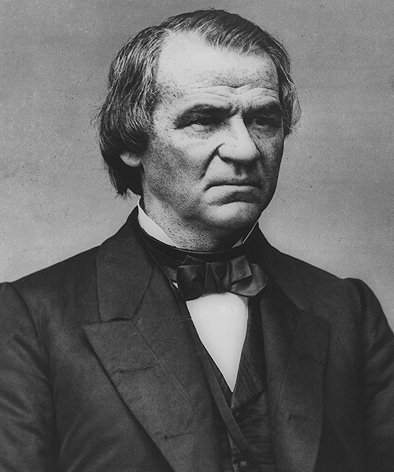
Despite a veto by President Andrew Johnson,
the Civil Rights Bill of 1866 was passed by Congress granting blacks
the rights and privileges of U.S. citizenship.
Birthday - African
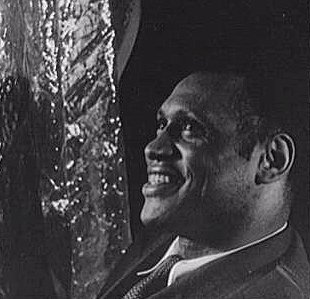
American actor and singer Paul Robeson (1898-1976) was born in Princeton, New Jersey. Best known for his performance
in The Emperor Jones, he also enjoyed a long run on Broadway
in Shakespeare's Othello. In 1950, amid ongoing anti-Communist hysteria,
Robeson was denied a U.S. passport after refusing to sign an affidavit
on whether he had ever been a member of the Communist Party.
April 10 Return
to Top of Page
April 10, 1942 -
During World War II in the Pacific, the Bataan Death March began as
American and Filipino prisoners were forced on a six-day march from an airfield on Bataan to a camp near Cabanatuan.
Some 76,000 Allied POWs including 12,000 Americans were forced to walk 60
miles under a blazing sun without food or water to the POW camp, resulting
in over 5,000 American deaths.
April 10, 1945 - The Nazi concentration camp at Buchenwald
was liberated by U.S. troops. Located near Weimar in Germany, Buchenwald
was established in July 1937 to hold criminals and was one of the
first major concentration camps. It later included Jews and homosexuals
and was used as a slave labor center for nearby German companies. Of
a total of 238,980 Buchenwald inmates, 56,545 perished. Following its
liberation, Supreme Allied Commander, General Dwight D. Eisenhower,
and other top U.S. commanders visited the sub-camp at Ohrdruf. U.S. Troops also forced German civilians from
nearby towns into the camp to view the carnage.
April 10, 1998 -
Politicians in Northern Ireland reached an agreement aimed at ending
30 years of violence which had claimed over 3,400 lives. Under the agreement,
Protestants and Catholics in Northern Ireland would govern together
in a new 108-member Belfast assembly, thus ending 26 years of ''direct
rule'' from London.
Birthday - Publisher
Joseph Pulitzer (1847-1911) was born in Budapest, Hungary. He came to
America in 1864 and fought briefly in the Civil War for the Union. He
then began a remarkable career in journalism and publishing. His newspapers
included the St. Louis Post-Dispatch and the New York World.
He also endowed the journalism school at Columbia University and established
a fund for the Pulitzer Prizes, awarded annually for excellence in journalism.
April 11
April 11, 1968 -
A week after the assassination of Martin Luther King, the Civil Rights
Act of 1968 was signed into law by President Lyndon
B. Johnson. The law prohibited discrimination in housing, protected
civil rights workers and expanded the rights of Native Americans.
April 11, 1970 -
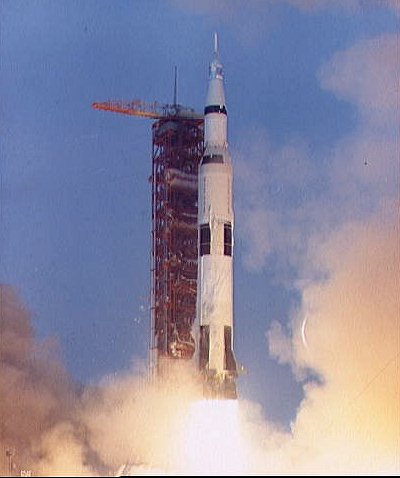
Apollo 13 was launched from Cape
Kennedy at 2:13 p.m. Fifty-six hours into the flight an oxygen tank
exploded in the service module. Astronaut John L. Swigert saw a warning
light that accompanied the bang and said, "Houston, we've had a
problem here." Swigert, James A. Lovell and Fred W. Haise
then transferred into the lunar module, using it as a "lifeboat"
and began a perilous return trip to Earth, splashing down safely on
April 17th.
April 11, 1983 -
Harold Washington became the first African American mayor of Chicago,
receiving 51 percent of the vote. Re-elected in 1987, he suffered a
fatal heart attack at his office seven months later.
Birthday - American
orator Edward Everett (1794-1865) was born in Dorchester, Massachusetts.
In 1863, at the dedication of the Gettysburg Battlefield, he delivered
the main address, lasting two hours. He was then followed by President Abraham Lincoln who spoke for
about two minutes delivering the Gettysburg Address.
April 12
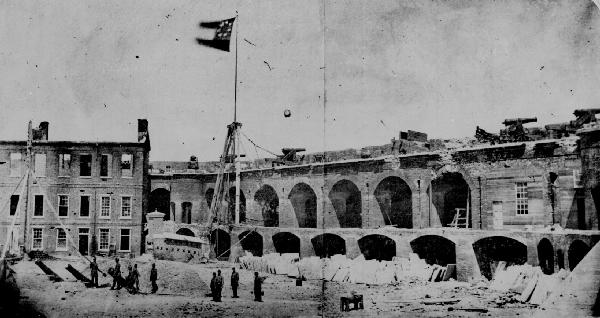
April 12, 1861 -
The American Civil War began as
Confederate troops under the command of General Pierre
Beauregard opened fire at 4:30 a.m. on Fort
Sumter in Charleston, South Carolina.
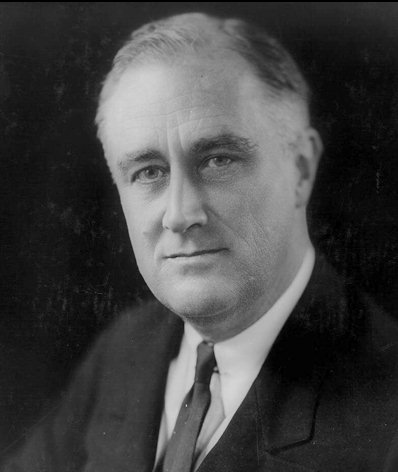
April 12, 1945 -
President Franklin D. Roosevelt died
suddenly at Warm Springs, Georgia, after suffering a cerebral hemorrhage. He had been President since March
4, 1933, elected to four consecutive terms and had guided America out
of the Great Depression and through World War II.
April 12, 1961 - Russian cosmonaut Yuri Gagarin became the first human in space. He traveled aboard the Soviet spacecraft Vostok I to an altitude of 187 miles (301 kilometers) above the earth and completed a single orbit in a flight lasting 108 minutes. The spectacular Russian success intensified the already ongoing Space Race between the Russians and Americans. Twenty-three days later, Alan Shepard became the first American in space. This was followed in 1962 by President Kennedy’s open call to land an American on the moon before the decade’s end.
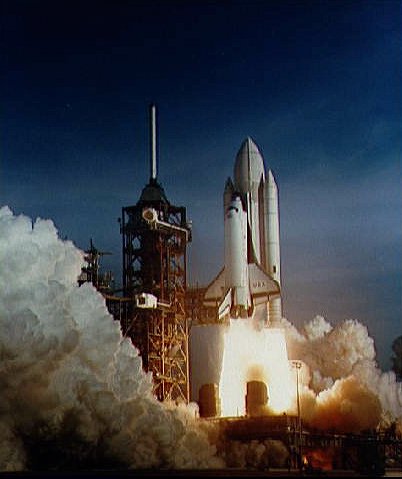
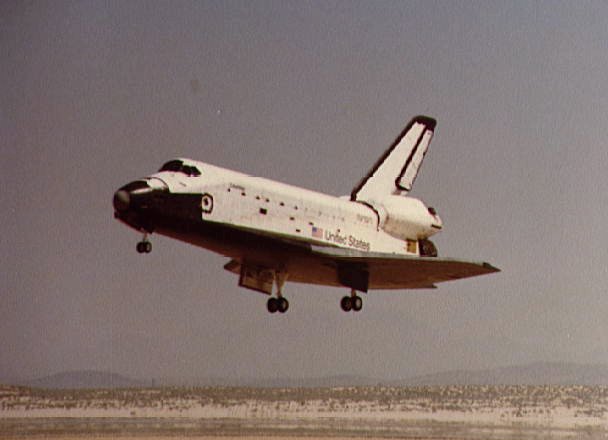
April 12, 1981 - The first space shuttle flight occurred with the launching of Columbia with astronauts John Young and Robert Crippen aboard. Columbia spent 54 hours in space, making 36 orbits, then landed at Edwards Air Force Base in California.
April 13
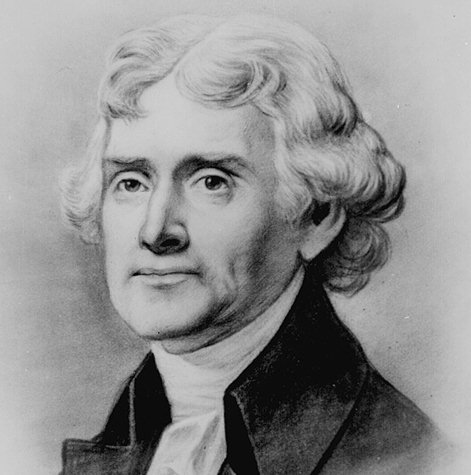
Birthday - Thomas
Jefferson (1743-1826) was born in Albermarle County, Virginia. He
was an author, inventor, lawyer, politician, architect, and one of the
finest minds of the 1700's. He authored the American Declaration
of Independence and later served as the 3rd U.S. President from
1801 to 1809. He died on July 4, 1826, the same day as his old friend
and one-time political rival John Adams.
April 14
April 14, 1775 -
In Philadelphia, the first abolitionist society in American was founded
as the "Society for the relief of free Negroes unlawfully held in bondage."'
April 14, 1828 -
The first dictionary of American-style English was published by Noah Webster
as the American Dictionary of the English Language.
April 14, 1865 -
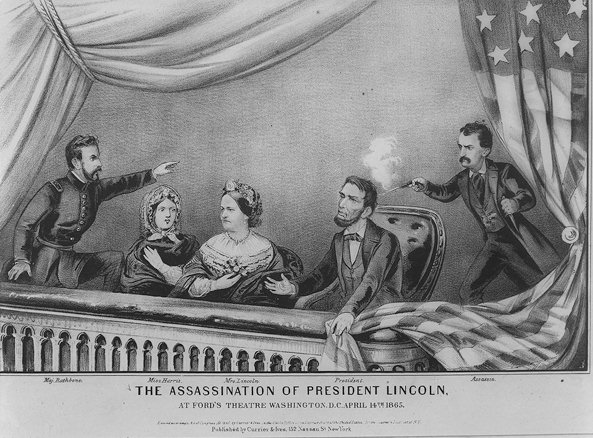
President Abraham Lincoln was
shot and mortally wounded while
watching a performance of Our American Cousin at Ford's Theater
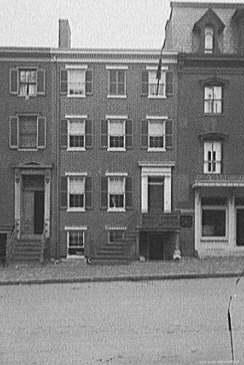
in Washington. He was taken to a nearby
house and died the following morning at 7:22 a.m.
April 14, 1986 -
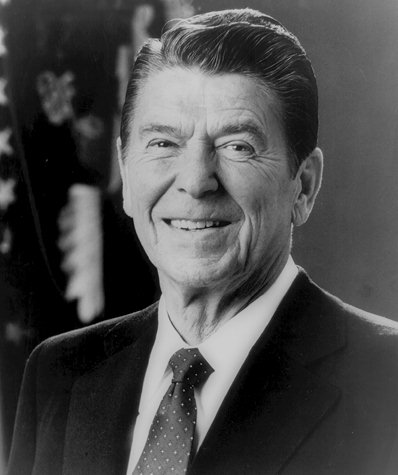
U.S. warplanes, on orders from President Ronald
Reagan, bombed the Libyan cities of Tripoli and Benghazi in retaliation
for the April 5th terrorist bombing of a discotheque in West Berlin in
which two American soldiers were killed. Among the 37 person killed
in the air raid was the infant daughter of Muammar Qaddafi, Libya's head
of state.
April 15 Return
to Top of Page
April 15, 1817 -
The first American school for the deaf was founded by Thomas H. Gallaudet
and Laurent Clerc in Hartford, Connecticut.
April 15, 1912 -
In the icy waters off Newfoundland, the luxury liner Titanic with
2,224 persons on board sank at 2:27 a.m. after striking an iceberg just
before midnight. Over 1,500 persons drowned while 700 were rescued by
the liner Carpathia which arrived about two hours after Titanic went down.
April 16
April 16, 1862 -
Congress abolished slavery in the District of Columbia and appropriated
$1 million to compensate owners of freed slaves.
April 16, 1995 - Iqbal Masih, a young boy from Pakistan who spoke out against child
labor, was shot to death. At age four, he had been sold into servitude
as a carpet weaver and spent the next six years shackled to a loom.
At age ten, he escaped and began speaking out, attracting worldwide
attention as a featured speaker during an international labor conference in Sweden.
Birthday - American aviation pioneer Wilbur Wright (1867-1912) was born in Millville,
Indiana. On December 17, 1903, along with his brother Orville, the Wright
brothers made the first successful flight of a motor driven aircraft.
It flew for 12 seconds and traveled 120 feet. By 1905, they had built a
plane that could stay airborne for half an hour, performing figure eights
and other aerial maneuvers. Wilbur died of Typhoid fever in May 1912.
Birthday - Film
comedian Charlie Chaplin (1889-1977) was born in London. He began in
vaudeville and was discovered by American film producer Mack Sennett.
He then went to Hollywood to make silent movies, developing the funny
'Little Tramp' film character. Chaplin's classics include The Kid, The Gold Rush, City Lights and Modern Times. In
1940, he made The Great Dictator poking fun at Adolf Hitler,
who bore a resemblance to Chaplin. In his later years, Chaplin
had a falling out with Americans, but returned in 1972 to receive a
special Academy Award. In 1975, he was knighted by Queen Elizabeth
II.
April 17
April 17, 1961 -
A U.S.-backed attempt to overthrow Premier Fidel Castro of Cuba failed disastrously in what became known as the Bay of Pigs fiasco. About 1,400 anti-Castro exiles invaded the island's southern coast along the Bay of Pigs but were overrun by 20,000 Cuban soldiers and jailed. Trained and guided by the U.S., the exiles had expected support from U.S. military aircraft and help from anti-Castro insurgents on the island. Instead, due to a series of mishaps, they had fended for themselves with no support. The failed invasion heightened Cold War tensions between Cuba's political ally, Soviet Russia, and the fledgling administration of President John F. Kennedy. The following year, the Russians brazenly installed nuclear missiles in Cuba resulting in the Cuban Missile Crisis.
April 17, 1989 -
The Polish labor union Solidarity was granted legal status after nearly
a decade of struggle, paving the way for the downfall of the Polish
Communist Party. In the elections that followed, Solidarity candidates
won 99 out of 100 parliamentary seats and eventually forced the acceptance
of a Solidarity government led by Lech Walesa.
Birthday - American
financier John Pierpont (J.P.) Morgan (1837-1913) was born in Hartford,
Connecticut. He displayed extraordinary management skills, reorganizing
and consolidating a number of failing companies to make them profitable.
His extensive interests included banking, steel, railroads and art collecting.
In 1895, he aided the failing U.S. Treasury by carrying out a private
bond sale among fellow financiers to replenish the treasury.
April 18
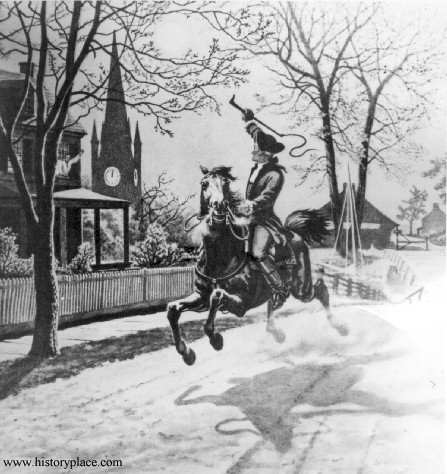
April 18, 1775 - The Midnight
Ride of Paul Revere and William Dawes occurred as the two men rode
out of Boston about 10 p.m. to warn patriots at Lexington and Concord
of the approaching British.
April 18, 1906 -
The San Francisco Earthquake struck at 5:13 a.m., followed by a massive
fire from overturned wood stoves and broken gas pipes. The fire raged uncontrollably
for three days resulting in the destruction of over 10,000 acres of
property and 4,000 lives lost.
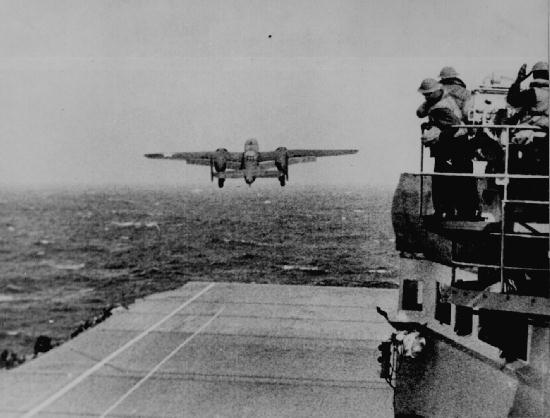
April 18, 1942 - The first air raid on mainland Japan during World War II occurred
as General James Doolittle led a squadron of B-25 bombers taking
off from the carrier Hornet to bomb Tokyo and three other cities.
Damage was minimal, but the raid boosted Allied morale following years
of unchecked Japanese military advances.
April 18, 1982 -
Queen Elizabeth II of England signed the Canada Constitution Act of
1982 replacing the British North America Act of 1867, providing Canada
with a new set of fundamental laws and civil rights.
Birthday - American
attorney Clarence Darrow (1857-1938) was born in Kinsman, Ohio. He championed
unpopular causes, and is best known for the Scopes 'monkey trial' in
which he defended a teacher who taught the theory of evolution.
April 19
April 19, 1775 -
At dawn in Massachusetts, about 70 armed militiamen stood face to face
on Lexington Green with a British advance guard unit. An unordered 'shot
heard around the world' began the American
Revolution. A volley of British rifle fire was followed by a charge
with bayonets leaving eight Americans dead and ten wounded.
April 19, 1943 -
Jews in the Warsaw
Ghetto staged an armed revolt against Nazi SS troops attempting
to forcibly deport them to death camps.
April 19, 1989 -
Forty-seven U.S. sailors were killed by an explosion in a gun turret
on the USS Iowa during gunnery exercises in the waters off Puerto
Rico.
April 19, 1993 -
At Waco, Texas, the compound of the Branch Davidian religious cult burned
to the ground with 82 persons inside, including 17 children. The fire
erupted after federal agents battered buildings in the compound with
armored vehicles following a 51-day standoff.
April 19, 1995 -
At 9:02 a.m., a massive car-bomb explosion destroyed the entire side
of a nine story federal building in Oklahoma City, killing 168 persons,
including 19 children inside a day care center. A decorated Gulf War
veteran was later convicted for the attack.
April 20 Return
to Top of Page
April 20, 1914 -
Miners in Ludlow, Colorado, were attacked by National Guardsmen paid
by the mining company. The miners were seeking recognition of their
United Mine Workers Union. Five men and a boy were killed by machine
gun fire while 11 children and two women burned to death as the miners'
tent colony was destroyed.
April 20, 1999 - The deadliest school shooting in U.S. history occurred in Littleton,
Colorado, as two students armed with guns and explosives stormed into
Columbine High School at lunch time then killed 12 classmates and a teacher
and wounded more than 20 other persons before killing themselves.
Birthday - Adolf
Hitler (1889-1945) was born in Braunau am Inn, Austria. As leader
of Nazi Germany from 1933 to 1945, he waged a war
of expansion in Europe, precipitating the deaths of an estimated
50 million persons through military conflict and through the Holocaust in which the Nazis attempted to exterminate the entire Jewish population
of Europe.
April 21
April 21, 1836 -
The Battle of San Jacinto between Texans led by Sam
Houston and Mexican forces led by Santa Anna took place near present
day Houston. The Texans decisively defeated the Mexican forces thereby achieving independence.
April 21, 1918 -
During World War I, the Red Baron (Manfred von Richtofen) was shot down
and killed during the Battle of the Somme. He was credited with 80 kills
in less than two years, flying a red Fokker triplane. British pilots
recovered his body and buried him with full military honors.
April 22
April 22, 1864 -
"In God We Trust" was included on all newly minted U.S. coins
by an Act of Congress.
April 22, 1889 -
The Oklahoma land rush began at noon with a single gunshot signaling the start
of a mad dash by thousands of settlers. The were seeking to claim part of nearly
two million acres made available by the federal government. The land
originally belonged to Creek and Seminole Indian tribes.
Birthday - Vladimir Lenin (1870-1924) was born in Simbirsk,
Russia. He led the Russian Revolution of October 1917 which toppled Czar Nicholas and paved the way for a harsh Communist regime.
Following his death in 1924, his body was embalmed and placed on display
in Moscow's Red Square, becoming a shrine that was visited by millions during the years
of the Soviet Union.
April 23
April 23rd - Established
by Israel's Knesset as Holocaust Day in remembrance of the estimated
six million Jews killed by Nazis.
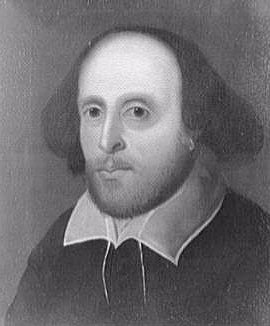
Birthday - William
Shakespeare (1564-1616) was born at Stratford-on-Avon, England.
Renowned as the most influential writer in the English language, he
created 36 plays and 154 sonnets, including Romeo and Juliet, Hamlet and The Merchant of Venice.
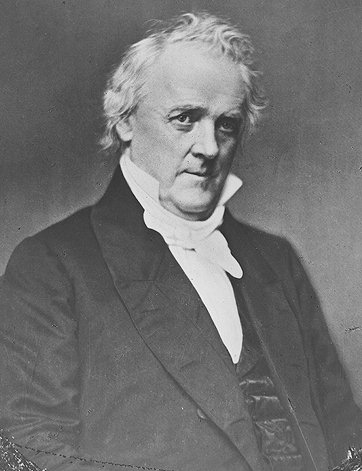
Birthday - James
Buchanan (1791-1868) the 15th U.S. President was born in Cove Gap, Pennsylvania. He was the only life-long
bachelor to occupy the White House,
serving just one term from 1857 to 1861.
April 24
April 24, 1800 -
The Library of Congress was established in Washington, D.C. It is America's oldest federal cultural institution and the world's largest library. Among the 145 million items in its collections are more than 33 million books, 3 million recordings, 12.5 million photographs, 5.3 million maps, 6 million pieces of sheet music and 63 million manuscripts. About 10,000 new items are added each day.
April 24, 1915 -
In Asia Minor during World War I, the first modern-era genocide began
with the deportation of Armenian leaders from Constantinople and subsequent
massacre by Young Turks. In May, deportations of all Armenians and mass
murder by Turks began, resulting in the complete elimination of the
Armenians from the Ottoman Empire and all of the historic Armenian homelands.
Estimates vary from 800,000 to over 2,000,000 Armenians murdered.
April 25 Return
to Top of Page
April 25, 1967 -
The first law legalizing abortion was signed by Colorado Governor John Love,
allowing abortions in cases in which a panel of three doctors unanimously
agreed.
Birthday - Radio
inventor Guglielmo Marconi (1874-1937) was born in Bologna, Italy. He
pioneered the use of wireless telegraphy in the 1890's. By 1921, Marconi's
invention had been developed into wireless telephony (voice radio).
April 26
April 26, 1937 -
During the Spanish Civil War, the ancient town of Guernica was attacked
by German warplanes. After destroying the town in a three hour bombing
raid, the planes machine-gunned fleeing civilians.
April 26, 1944 -
Federal troops seized the Chicago offices of Montgomery Ward and removed
its chairman after his refusal to obey President Roosevelt's order to
recognize a CIO union. The seizure ended when unions won an election
to represent the company's workers.
April 26, 1986 -
At the Chernobyl nuclear power plant in the Ukraine, an explosion caused a meltdown of the nuclear fuel and spread a radioactive cloud
into the atmosphere, eventually covering most of Europe. A 300-square-mile area around the plant was evacuated. Thirty one persons were reported
to have died while an additional thousand cases of cancer from radiation were expected. The
plant was then encased in a solid concrete tomb to prevent the release of
further radiation.
April 26, 1994 -
Multiracial elections were held for the first time in the history of
South Africa. With approximately 18 million blacks voting, Nelson Mandela
was elected president and F.W. de Klerk vice president.
Birthday - American
artist and naturalist John J. Audubon (1785-1851) was born in Haiti.
He drew life-like illustrations of the birds of North America.
Birthday - Landscape
architect Frederick Law Olmsted (1822-1903) was born in Hertfors, Connecticut.
He helped design some of the most famous parks in America including
Central Park in New York, the Emerald Necklace series of connecting
parks in Boston, and Yosemite National Park.
Birthday - Nazi Rudolf Hess (1894-1987) was born in Alexandria, Egypt. He was Deputy Führer
of Nazi Germany and a member of Hitler's inner circle. On May 10, 1941,
he made a surprise solo flight and parachuted into Scotland intending
to negotiate peace with the British. However, the British promptly arrested
him and confined him for the duration. Following the war, he was taken
to Nuremberg and put on trial with other top Nazis. He died in captivity
in 1987, the last of the major Nuremberg
war criminals.
April 27
April 27, 1865 - On the Mississippi River, the worst steamship disaster in U.S. history
occurred as an explosion aboard the Sultana killed nearly 2,000
passengers, mostly Union solders who had been prisoners of war and were
returning home.
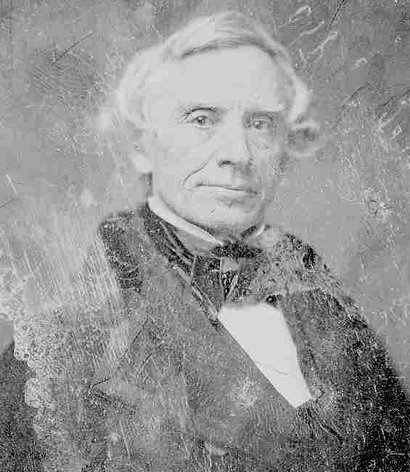
Birthday - Telegraph
inventor Samuel F.B. Morse (1791-1872)
was born in Charlestown, Massachusetts. He developed the idea of an
electromagnetic telegraph in the 1830's and tapped out his first message
"What hath God wrought?" in 1844 on the first telegraph line,
running from Washington, D.C., to Baltimore. The construction of the first
telegraph line was funded by Congress ($30,000) after Morse failed to
get any other financial backing. After Western Union was founded in
1856, telegraph lines were quickly strung from coast to coast in America.
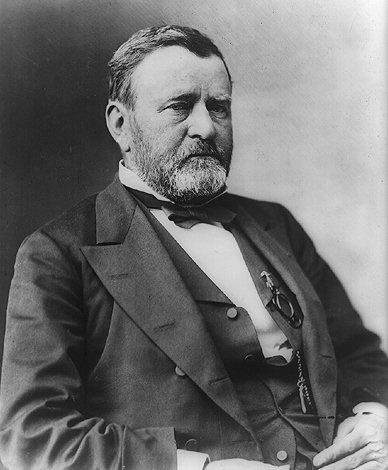
Birthday -
Civil War General and 18th U.S. President Ulysses
S. Grant (1822-1885) was born in Point Pleasant, Ohio. During the
war, he earned the nickname "Unconditional Surrender" Grant
and was given command of the Union armies. He served as President from
1869 to 1877 in an administration plagued by scandal. He then went on
to write his memoirs and died in 1885, just days after its completion.
April 28
April 28, 1789 -
On board the British ship Bounty, Fletcher Christian led a mutiny
against Captain William Bligh, setting him and 18 loyal crew members
adrift in a 23-foot open boat. Bligh survived a 47-day voyage sailing
over 3,600 miles before landing on a small island. Christian sailed
the Bounty back to Tahiti, eventually settling on Pitcairn Island
and burning the ship.
April 28, 1945 -
Twenty-three years of Fascist rule in Italy ended abruptly as Italian
partisans shot former Dictator Benito Mussolini. Other leaders of the Fascist Party
and friends of Mussolini were also killed along with his mistress, Clara
Petacci. Their bodies were then hung upside down and pelted with stones
by jeering crowds in Milan.
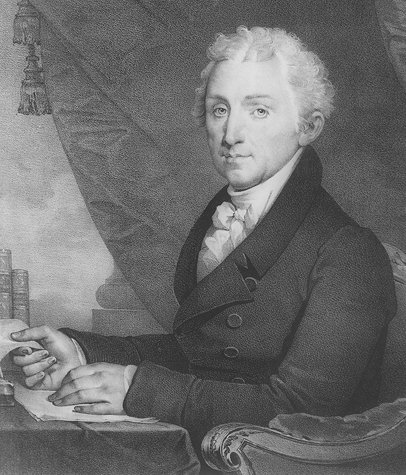
Birthday - James
Monroe (1758-1831) the 5th U.S. President was born in Westmoreland
County, Virginia. He served two terms from 1817 to 1825 and is best
known for the Monroe Doctrine which declared the U.S. would not permit
any European nation to extend its holdings or use armed force in North
or South America.
April 29
April 29, 1992 -
Riots erupted in Los Angeles following the announcement that a jury
in Simi Valley, California, had failed to convict four Los Angeles police
officers accused in the videotaped beating of an African American man.
Birthday - American
publisher William Randolph Hearst (1863-1951) was born in San Francisco.
The son of a gold miner, in 1887 he dropped out of Harvard to take control
of the failing San Francisco Examiner which his father had purchased.
He saved the Examiner, then went to New York and bought the New York
Morning Journal to compete with Joseph Pulitzer. Hearst's sensational
style of "yellow" journalism sold unprecedented numbers of
newspapers and included promoting a war with Cuba in 1897-98. He expanded
into other cities and into magazine publishing, books and films. He
also served in Congress and nearly became mayor of New York City.
Birthday - Japan's
Emperor Hirohito (1901-1989) was born in Tokyo. In 1926, he became the
124th in a long line of monarchs and then presided over wartime Japan
which was led by militarist Prime Minister Hideki Tojo. Following the
dropping of two atomic bombs by the U.S., he made a radio address urging
his people to stop fighting. After the war, he remained the symbolic
head of state in Japan's new parliamentary government. In 1946, he renounced
his divinity and then pursued his interest in marine biology, becoming
a recognized authority in the subject.
April 30
April 30, 1789 - George
Washington became the first U.S. President as he was administered
the oath of office on the balcony of Federal Hall at the corner of Wall
and Broad Streets in New York City.
April 30, 1948 -
Palestinian Jews declared their independence from British rule and established
the new state of Israel. The country soon became a destination for tens of
thousands of Nazi Holocaust survivors and a strong U.S. ally.
April 30, 1967 -
Boxer Muhammad Ali was stripped of his world heavyweight boxing championship
after refusing to be inducted into the American military. He had claimed
religious exemption.